 |
|
|
|
|
Product Details:
Payment & Shipping Terms:
|
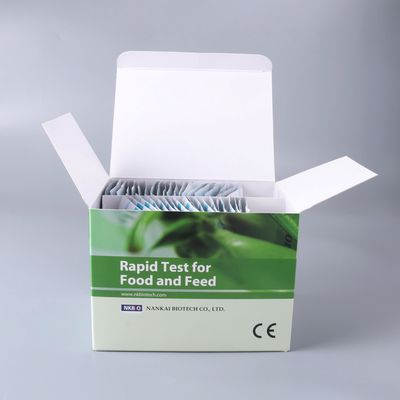
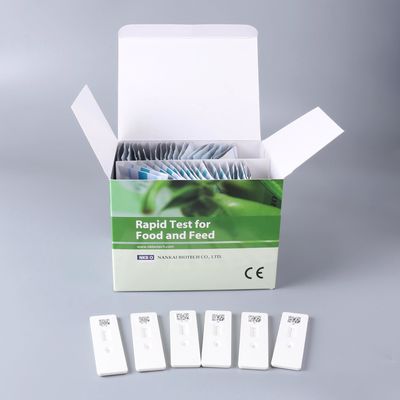
| Test Matrix: | Fish & Seafood | Read Results: | 3-5 Minutes |
|---|---|---|---|
| Delivery Date: | 1 Working Day | Storage: | Room Temperature |
| Packing: | 40/50 Tests Per Box | Shelf Life: | 15 Months |
| Non Toxin: | Harmless |
Not just a rapid test supplier — a long-term, globally proven food safety partner.

Product Description
The Histamine Rapid Test Kit is designed for fast on-site screening of histamine in fish, shrimp, seafood products, frozen fish, canned fish and aquatic raw materials.
For seafood processors, exporters, cold-chain operators and QC laboratories, the real risk is not only whether histamine can be detected — it is when the risk is discovered.
If high histamine is found only after fish raw materials have been purchased, processed, frozen, canned, shipped or inspected by buyers, the cost may include shipment rejection, product recall, customer claims, food safety incidents and long-term buyer distrust.
This rapid screening solution helps QC teams identify suspicious batches earlier, before products enter the next stage of processing or export.
It is a practical front-end seafood safety screening tool for fish processing plants, seafood exporters, cold-chain warehouses, canning factories, importers and food safety laboratories.
⸻
Main Application Focus
1. High-Histamine Fish Screening — Priority Application
Histamine risk is especially important in fish species naturally rich in histidine, where poor temperature control or delayed processing can cause histamine formation.
Suitable samples include:
* Tuna
* Mackerel
* Sardine
* Anchovy
* Herring
* Mahi-mahi
* Bonito
* Other scombroid fish species
Best suited for:
* Fish processors
* Seafood exporters
* Cold-chain warehouses
* Fishing vessel receiving points
* Importers and wholesale buyers
* Third-party QC laboratories
Main value:
Screen high-risk fish batches before purchasing, cutting, freezing, canning, shipment or buyer inspection.
⸻
2. Seafood Processing & Export QC
Histamine screening is valuable for seafood supply chains where batch value is high and cold-chain risk is difficult to control.
Suitable samples include:
* Frozen fish
* Chilled fish
* Fish fillets
* Fish mince / fish raw material
* Canned tuna
* Canned sardine
* Fish sauce and fermented fish products
* Shrimp and selected seafood products
Best suited for:
* Seafood processing factories
* Canning factories
* Export packing facilities
* Cold storage operators
* Importers
* Retail seafood suppliers
Main value:
Check different fish lots before grading, processing, freezing, canning, cold storage, shipment or buyer acceptance.
⸻
3. Cold Chain and Freshness Risk Monitoring
Histamine is closely related to time-temperature abuse. Once formed, it is not easily removed by normal cooking or processing, so early screening is critical.
Suitable use points include:
* Raw fish receiving
* Vessel unloading
* Factory intake inspection
* Cold storage release
* Pre-shipment inspection
* Customer complaint investigation
Best suited for:
* Seafood QC teams
* Cold-chain logistics companies
* Food safety inspection teams
* Market supervision laboratories
Main value:
Identify freshness and storage-related risk before the product reaches customers or regulators.
⸻
Why Histamine Rapid Screening Matters
For professional seafood buyers, the key question is not only:
“Can histamine be detected?”
but:
“Can we identify the risk before the batch becomes a commercial or food safety problem?”
Rapid screening helps users:
* Detect suspicious fish batches earlier
* Reduce delayed discovery after processing or shipment
* Lower unnecessary laboratory workload
* Improve raw material acceptance control
* Support cold-chain and freshness monitoring
* Make faster QC decisions in real seafood supply chains
This is especially important for high-risk fish and export-oriented seafood products where histamine findings may directly affect shipment acceptance and brand reputation.
⸻
A New Rapid Screening Alternative to Low-Sensitivity Chemical Methods
In many markets, low-cost chemical/colorimetric methods are still used for simple histamine screening.
However, these methods often have practical limitations:
* Lower sensitivity
* Unstable color interpretation
* Higher risk of false positives or false negatives
* Poor suitability for high-standard export QC
* Limited value for professional seafood processors
Our new colloidal gold rapid test technology provides a more practical and reliable option for users who need higher sensitivity, clearer results and better screening confidence.
It is designed for real seafood QC, not just “show testing”.
⸻
Rapid Test vs Traditional Chemical Method
Feature Colloidal Gold Histamine Rapid Test Traditional Chemical / Colorimetric Method
Main Purpose Professional seafood safety screening Low-cost rough screening
Sensitivity Higher, suitable for stricter QC needs Often limited
Result Reading Clear visual result / optional reader Color change can be subjective
False Result Risk Lower when properly used Higher risk of false positives or false negatives
Field Use Suitable for processing plants and inspection sites Basic use only
Professional QC Value Stronger for export and processing control Limited for high-standard buyers
⸻
Optional Reader-Assisted Analysis
Results can be interpreted visually or with an optional dedicated reader.
When used with the reader, the system can:
* Improve positive / negative interpretation
* Provide semi-quantitative reference values
* Support digital documentation and traceability
* Help manage batch-level QC records
This upgrade is recommended for seafood exporters, processing factories, canning plants and laboratories requiring more standardized data control.
⸻
Laboratory-Backed Screening Capability
We are not only a rapid test strip supplier.
Our strength lies in an integrated system covering:
* In-house R&D
* Large-scale manufacturing
* Colloidal gold rapid screening technology
* Independent laboratory verification
With our own laboratories equipped with LC-MS/MS and GC-MS/MS systems, we can evaluate how rapid screening results align with laboratory reference methods in validated applications.
This helps support product optimization, matrix validation and long-term reliability in real seafood applications.
For buyers, this means the product is not just a low-cost strip, but a more reliable front-end screening solution supported by laboratory-backed verification capability.
⸻
Technical Specifications
Item Description
Detection Target Histamine
Detection Type Qualitative / Semi-quantitative with reader
Priority Applications Fish and seafood safety screening
Main Matrices Tuna, mackerel, sardine, anchovy, frozen fish, canned fish, fish raw materials, shrimp and seafood products
Result Reading Visual / Optional reader-assisted interpretation
Use Scenario Raw material intake, cold-chain monitoring, seafood processing QC, export pre-shipment screening
Storage 4–30°C
Shelf Life 15 months
Operation On-site rapid screening
⸻
Trust Statement
More Than a Test Strip — A Practical Seafood Safety Screening Tool
Histamine screening requires more than a cheap chemical test. Professional users need a solution that works in real seafood samples, real cold-chain workflows and real export pressure.
Our Histamine Rapid Test Kit is developed for practical front-end screening where speed, sensitivity, consistency and operational reliability matter.
Compared with low-cost chemical methods, our colloidal gold rapid test provides clearer interpretation and stronger suitability for professional seafood QC.
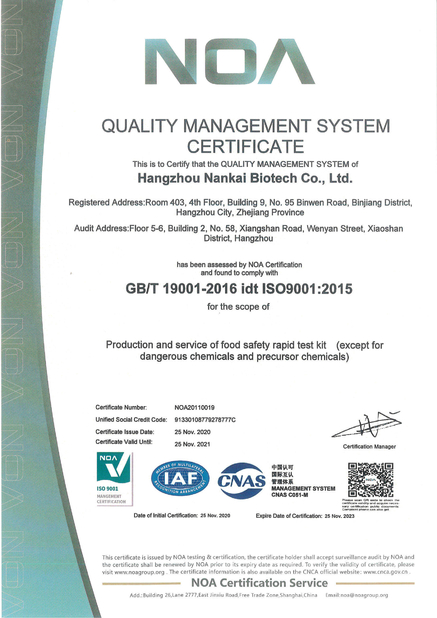
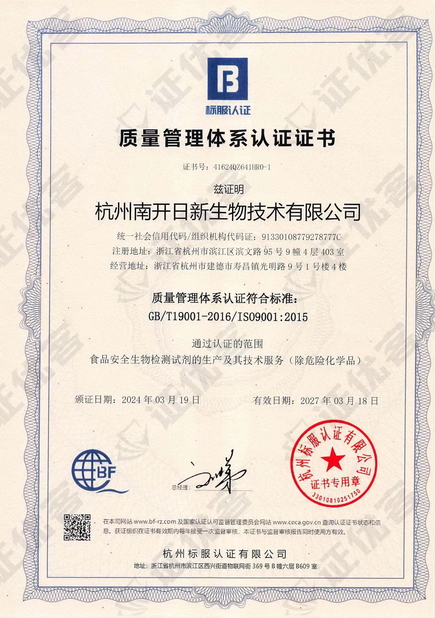
With 20+ years of rapid test manufacturing expertise, large-scale production experience and laboratory-backed verification capability, we provide a reliable screening solution for seafood processors, exporters, canning factories, cold-chain operators and laboratories that need earlier risk control before laboratory confirmation.
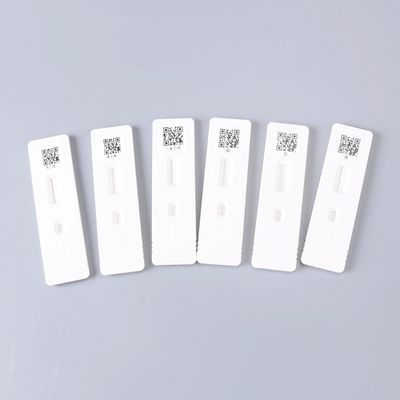
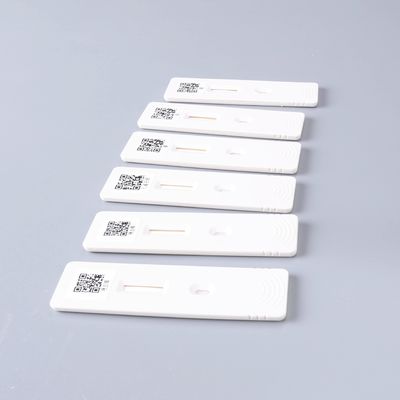
READ RESULTS WITH NAKED EYES
NEGATIVE:
The Test Line (T) is the same as or darker than the Control Line(C). It is negative.
POSITIVE:
The Test Line (T) is lighter than the Control Line(C),or there is no Test Line. It is positive.
INVALID:Reference Line Fails to appear
Insufficient specimen volume or incorrect procedural techniques are the most likely reasons for an invalid result.
Review the procedure and repeat the test with a new test kit. Stop using the test kit immediately if the problem
is not solved and contact your local distributor.
Why Choose Us?
Proven in Major International Events
Our rapid testing technologies have supported large-scale food safety monitoring programs
in high-standard international environments,
demonstrating reliability, speed, and operational efficiency
under real-world conditions.Supporting food safety monitoring in:
• 2008 Beijing Olympic Games
• 2010 Shanghai World Expo
• 2023 Hangzhou Asian Games
Global Trust & Real-World Validation
More Than a Test Kit — An Integrated Diagnostic Platform
20+ Years of Expertise • Trusted in Global Food Safety Programs
Unlike typical reagent suppliers, we operate as an integrated diagnostic
platform combining:
• In-house R&D
• Large-scale manufacturing
• Certified cleanroom production
• Independent third-party laboratories
Ensuring end-to-end quality control from development to real-world application.
Protect Your Shipment Before It Leaves
Don’t wait for laboratory results to discover a problem.
Screen early. Act early. Ship with confidence.
Contact us today to learn more about our cadmium rapid testing solutions for durian and tropical fruit exporters.
For new products, please contact us via,
sale@nkbiotech.com
Whatsapp: 86-151-5809-6930
Contact Person: Miss. Bella
Tel: 0086-151-5809-6930
Fax: 86-571-87114601